
Kabaddi Raid Tactics Explained: How Elite Raiders Beat a Seven-Man Defence
Thirty seconds, one breath, seven defenders — the hand touch, toe touch and dubki that decide kabaddi matches, explained in plain terms.
Story Summary
Thirty seconds, one breath, seven defenders — the hand touch, toe touch and dubki that decide kabaddi matches, explained in plain terms.
Key points
- There is no Pro Kabaddi League season running in 2026 — Season 13 will not take place this year, with the next edition likely in June–July 2027 — so this is a tactics guide, not a form guide.
- A raid lasts a maximum of 30 seconds, and the raider must chant "kabaddi" continuously on a single breath while crossing into the opposition half.
- The raider must cross the baulk line, 3.75 metres from the midline, for a raid to count — and crossing the bonus line one metre further on earns an extra point when six or more defenders are on the mat.
- The elite raider's toolkit is small but deadly: the running hand touch, the toe touch, and the dubki, the duck-and-dive escape that lets a raider slip under a tackle.
The raid in 30 seconds
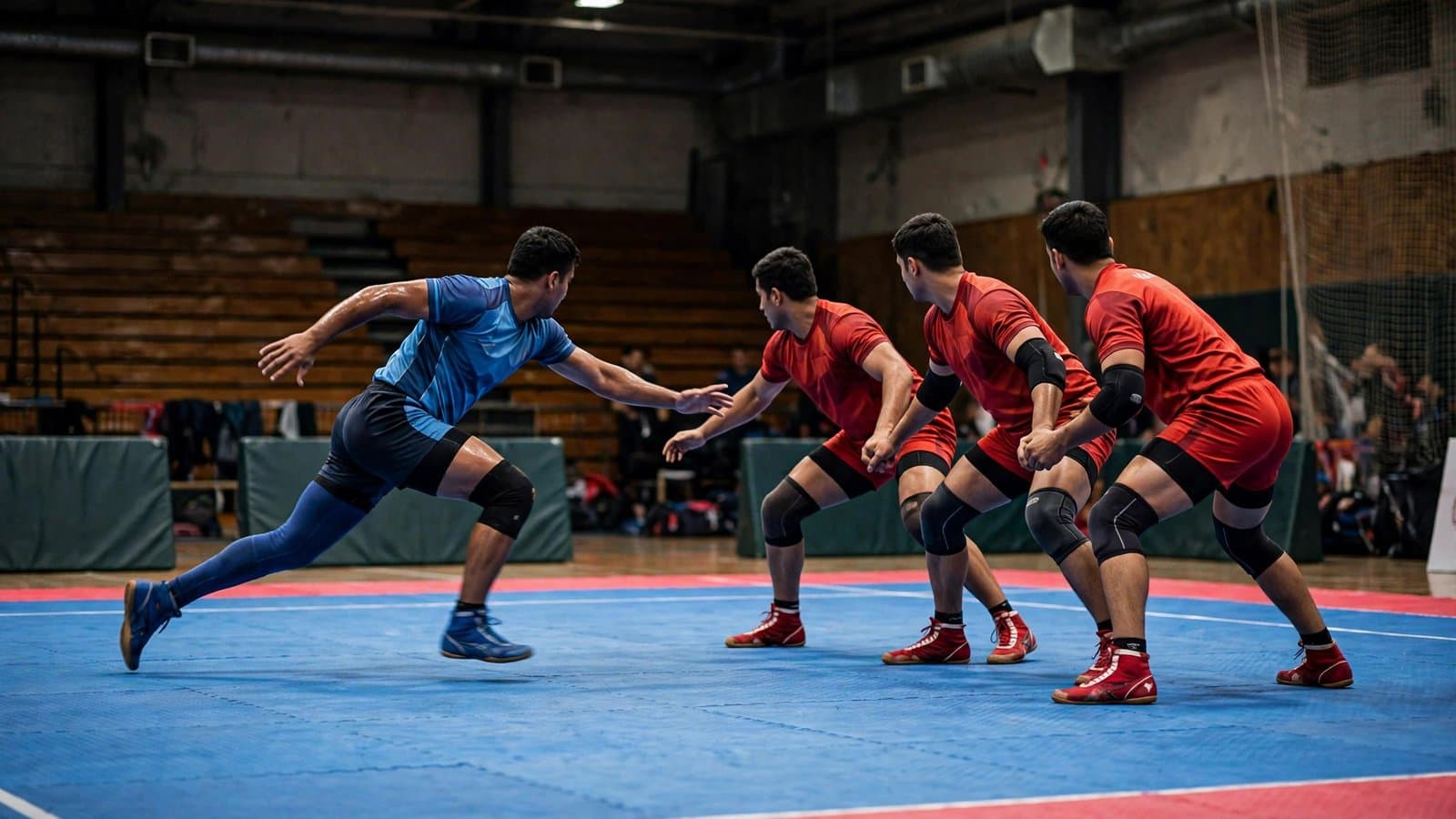
Kabaddi is played between two teams of seven on a rectangular mat, divided into two halves by a midline. The game's central act is the raid: one player, the raider, crosses into the opposition half, tries to touch as many defenders as possible, and returns to his own half to score. Every defender he touches is worth one point and must leave the mat.
The constraints are what make it a contest of skill rather than speed alone. The raider has a maximum of 30 seconds to complete the raid, and throughout it he must chant the word "kabaddi" continuously, without a break, on a single breath. The chant — called the cant — is the proof that the raid is being performed on one breath. If it stops, even for a split second, the raider is declared out and the defending team scores.
For a raid to count at all, the raider must cross the baulk line, which runs parallel to the midline 3.75 metres into the defending half for men (3 metres for women). A raid that never reaches the baulk line scores nothing. One metre beyond the baulk line sits the bonus line, and crossing it with one foot — the other foot in the air — earns a bonus point, but only when there are six or more defenders on the mat. The bonus point does not revive an out player, and it must be earned before any touch, which is why the best raiders plan their route to the line before they ever reach for a defender.
The five weapons of an elite raider
Elite raiders rely on a small set of moves, executed at full speed and disguised until the last possible moment.
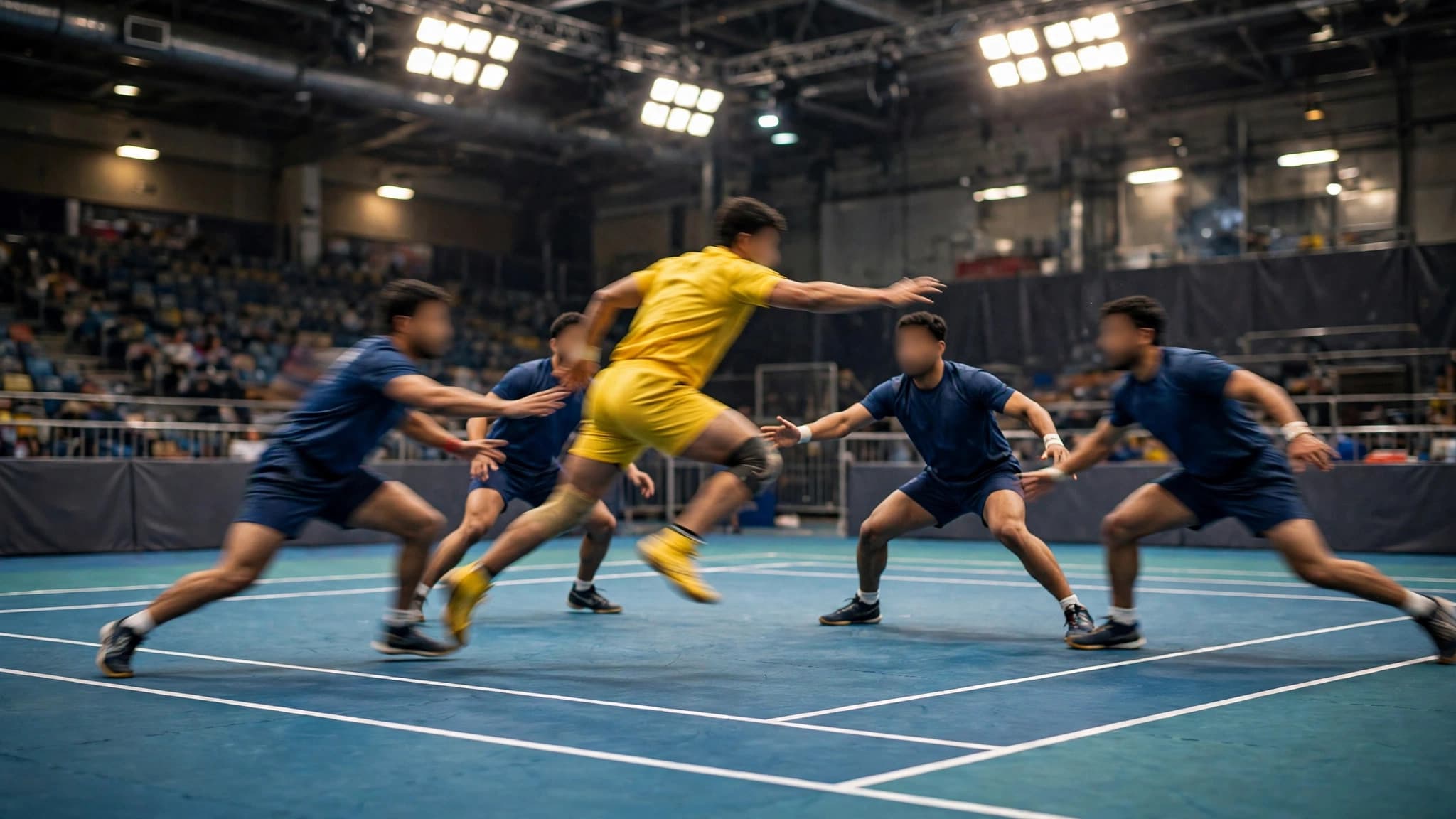
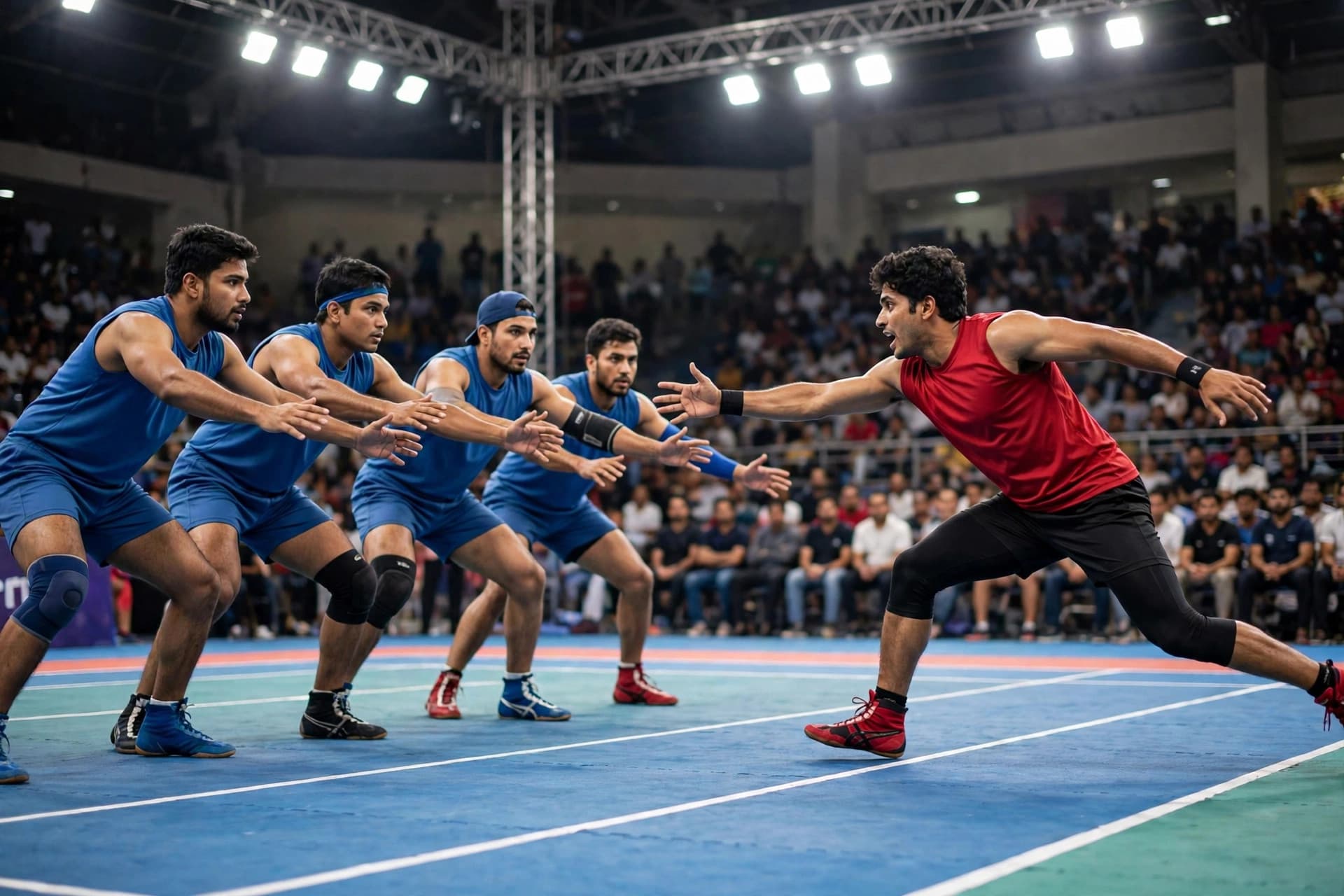
The running hand touch is the staple. The raider feints towards the centre defender, then bursts at maximum acceleration towards a corner defender and extends an arm in a lightning swipe to tag the shoulder or chest before retreating. It is the simplest move in the game and still the hardest to stop, because the defender has a fraction of a second to react.
The toe touch is its quieter cousin. The raider shifts his weight forward, distracts the defender with upper-body feints, then rapidly extends a leg to tap the toe or ankle of a flat-footed corner defender before snapping back into a crouch. It is a move for raiders who read body position well: the best time to use it is when a defender has planted his feet to brace for a tackle.
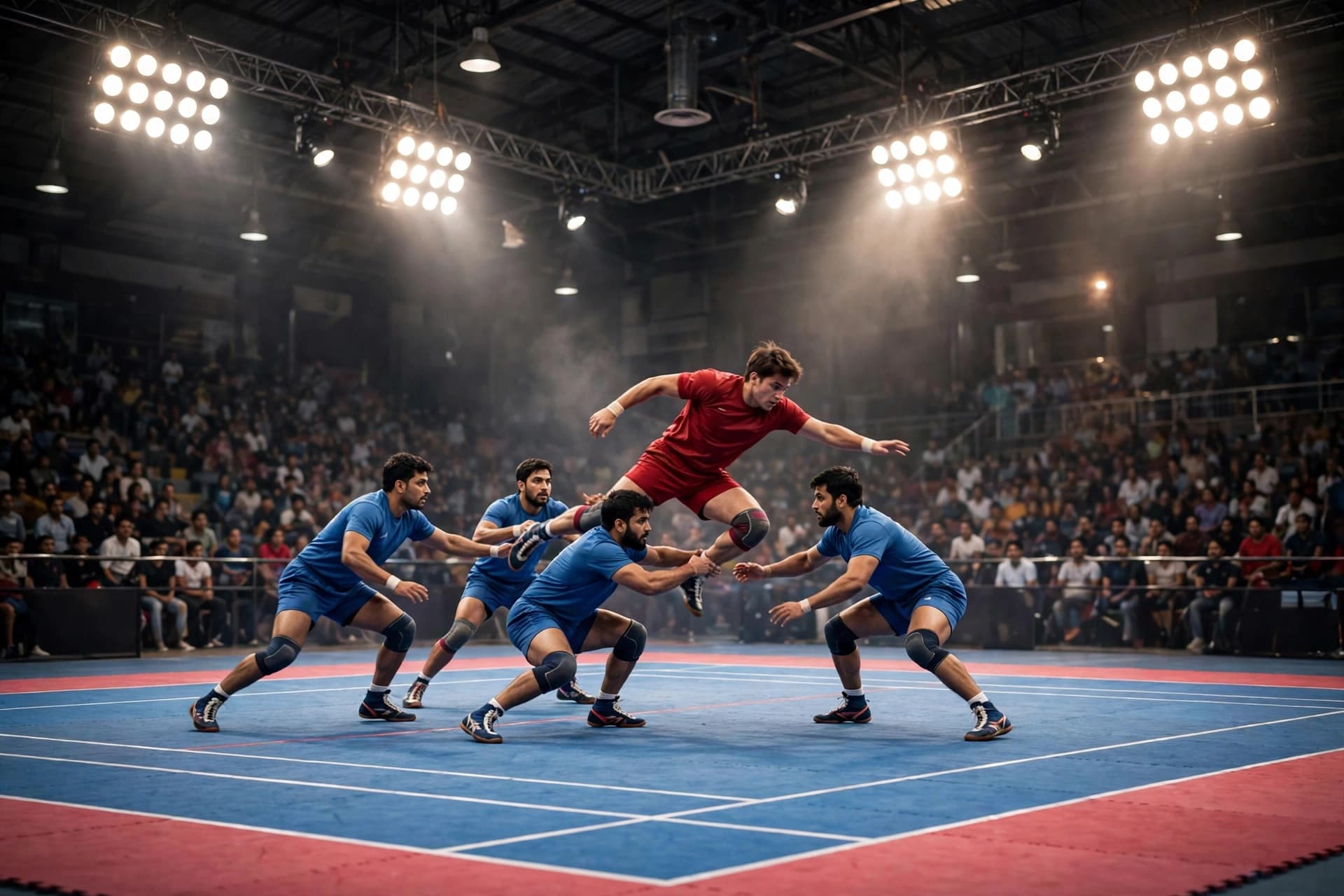
The dubki is the escape. Made famous by legendary Pro Kabaddi raider Pardeep Narwal, it is deployed when the defence's chain or cover attempts a waist-high block: the raider drops his centre of gravity, ducks under the attempted tackle and dives through the gap. It is a high-risk move — mistime it and the raider is caught low and held — but it is also the move that turns a trapped raid into a three-point haul.
The bonus-line run is a scoring play in itself. With six or more defenders on the mat, a raider who can reach the bonus line and get back safely banks a point without touching anyone. It is most valuable in a tight match, or when the defence is sitting deep and refusing to engage.
The kick and jump family — including the frog jump over a defender and the scorpion kick, a backward flip to tag a defender behind the raider — rounds out the toolkit. These are showpiece moves, used sparingly, but they punish a defence that overcommits to one side.
How defences answer
A seven-man defence is not seven individuals; it is a system. The corners hold the edges, the covers protect the middle, and the chain — defenders holding hands in pairs — keeps the line together and stops the raider from splitting it. When the raider commits, the chain collapses on him, the covers cut off the escape route to the midline, and the tackle is made before he can get a foot back across.
The defence has its own scoring weapon: the super tackle. When a team has three or fewer defenders left on the mat, a successful tackle earns a bonus point on top of the tackle point. It is why a team reduced to three defenders is not beaten yet — the super tackle turns desperation into a scoring opportunity.
Defences also use the clock. Each raid must start within 30 seconds of the previous one ending, and the raider's own 30-second limit means a well-organised defence can simply wait: hold the line, refuse to bite on feints, and let the raider run out of time or out of breath. After two consecutive empty raids, the third raid becomes do-or-die — the raider must score or be declared out — and the defence knows it.
Why raids fail
Most failed raids fail for the same three reasons. The raider crosses the baulk line without a plan and is caught in the chain. The raider reaches for a touch too early, giving the cover defender time to close the escape route. Or the raider simply runs out of breath — the chant falters, the referee's hand goes up, and the raid is over.
The best raiders avoid all three by doing less, not more. They cross the baulk line with a single target in mind, they use the bonus line to score without contact when the defence sits deep, and they treat the return to the midline as the real objective — the touch is only worth a point if the raider gets home. A raid that tags three defenders and ends in a tackle scores nothing; a raid that tags one and gets back scores one, revives a teammate, and keeps the pressure on.
That is the essence of elite raiding: not the spectacular dive, but the discipline to take the single point that is available and live to raid again. The dubki makes the highlights. The hand touch, the toe touch and the bonus line win the matches.
A note on the 2026 season
There is no Pro Kabaddi League season running in 2026. Season 12 ended on 31 October 2025, and Season 13 will not take place this year — the league has been without a broadcast partner since its five-year media rights deal with Star India, now JioStar, ended after Season 12, and the next edition is likely to be held in the June–July 2027 window, according to a Khel Now report. When the league returns, these are the skills its raiders will be judged on. Follow the sport on the kabaddi hub, read more from our core-market coverage on the cricket hub, and keep up with every result on GoalZaro's live scores.
FAQ
How long does a kabaddi raid last?
A maximum of 30 seconds in professional matches. The raider must complete the raid — tag defenders and return across the midline — within that time, while chanting "kabaddi" continuously on a single breath.
What is a bonus point in kabaddi?
A raider earns one bonus point by crossing the bonus line, one metre beyond the baulk line, with one foot grounded and the other in the air — but only when six or more defenders are on the mat.
What is a dubki?
A duck-and-dive escape move. When defenders attempt a waist-high block, the raider drops low and dives underneath them to slip through the tackle and reach safety. It was made famous by Pardeep Narwal in the Pro Kabaddi League.
What is a super tackle?
When a defending team has three or fewer players left on the mat, a successful tackle earns a bonus point in addition to the normal tackle point.
When is the next Pro Kabaddi League season?
Season 13 will not take place in 2026. It is likely to be held in the June–July 2027 window, after the league secures a new broadcast deal — though no official dates have been confirmed.
Kabaddi Explained: Rules, Raids and Points
Next in Kabaddi →No Pro Kabaddi League in 2026: Season 13 Pushed to 2027 as Broadcast Talks Stall
Zack D
Sports journalist & match analyst at GoalZaro covering live fixtures, verified scores, tactical reports, and international tournaments.
Comments
Join the conversation — share your take on this story.
Stay in the Loop
Get the stories that matter, straight to your inbox.
No comments yet - be the first to share your take.